

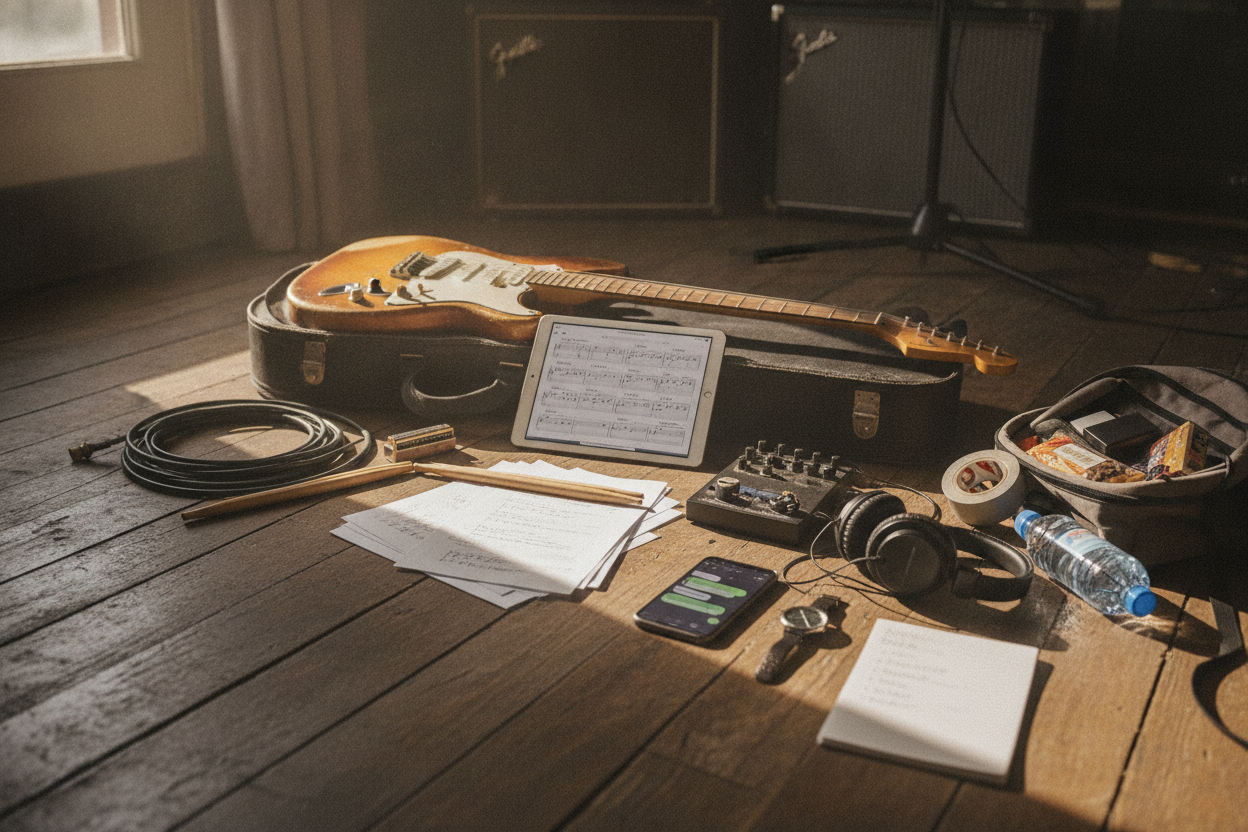
Most gig-day problems are small: a dead battery, a chart in the wrong key, a wrong turn that eats your soundcheck. Each is easy to prevent and stressful to fix twenty minutes before downbeat. A checklist moves those decisions to a calm moment, so you’re not making them in a dark load-in hallway.
The checklist below works for a three-set bar gig, a wedding or a jazz brunch.
The day before
Confirm the gig details
Most of the worst gig-day surprises come from details nobody confirmed. A day ahead, check you have:
- The exact address, plus where to load in and park
- Load-in time, soundcheck time and the first downbeat
- Set lengths, break times and the hard finish time
- Who provides the PA, backline and stage lighting
- Dress code
- A contact on the day, with a phone number
- Payment arrangements: how much, how, and from whom
If any of these is vague, ask now. A short message the day before is much easier than a dispute at the end of the night.
Review the songs, keys, tempos and arrangements
Get the setlist and go through it with your charts. Anything you haven’t played recently deserves a run-through, and so does anything in a different key from the last time you played it. Pay attention to:
- Keys that change with the singer, especially if you play the same song in another band in a different key
- Count-in tempos for songs that tend to get rushed
- Intros, endings, solo order and any extended sections
- Segues, so you know where you’re playing straight through
- Changes agreed at the last rehearsal
If you’re still building the setlist, Setlist Planning for Busy Bands covers openers, keys, energy and set timing.
Prepare your charts and lyrics
- Make sure every song on the setlist has a current chart or lyric sheet
- Put the charts in setlist order, on paper or in your app
- If you read from a tablet, make sure everything is available offline. Venue Wi-Fi is unreliable.
- Turn off auto-lock, or set it long enough to last a song
- Pack a printed backup of the setlist, and of any chart you can’t play without
SetRunner, our free browser tool, has a stage mode for large, readable charts. It also works offline once it’s loaded, and supports Bluetooth foot-pedal page turns. More on the SetRunner page.
Check your instrument and equipment
- Change strings, heads or reeds a day or two early, not an hour before
- Check intonation, tuning stability and any noisy pots or jacks
- Run your full rig at home: pedals, amp, in-ear system, keyboard patches
- Charge everything that runs on batteries or charging: wireless packs, in-ears, tablet, tuner, phone
- Make sure your rig can run on a single power point, with a power strip
Pack backups and spares
Pack at least:
- Spare strings, picks, sticks, reeds or valve oil, depending on what you play
- At least one spare instrument cable and one spare XLR
- Spare batteries in the sizes your gear uses
- A spare power supply for your pedalboard, or a backup plan without it
- An extension cord and a power strip
- Gaffer tape, a small flashlight and a multitool
- A pencil, for marking changes on paper charts
On the day
Plan your travel and arrival
Work backwards from soundcheck. You need enough time to load in and set up before it starts, and how much depends on the size of your rig and the venue’s requirements. A singer with a mic and an in-ear pack needs far less time than a drummer or a keyboard player with a full setup, and some venues set fixed load-in windows. On top of that, allow for traffic, finding parking, and the walk from the car to the stage with your gear. Arriving late usually means losing your soundcheck. Eat before you leave, because there’s often no time once you’re there, and bring water.
Load the car using the same list every time. The two things most often left behind are whatever you took out of your bag to use at home, and whatever was charging overnight.
Stage setup and soundcheck
- Find the person running sound and introduce yourself
- Confirm your inputs and where your monitor or in-ear mix comes from
- Know what you need to hear in your monitor, in order of priority, and ask for it clearly
- Line-check everything, including spare instruments and anything you switch to mid-set
- Mount your chart device or music stand where you can read it without turning away from the band
- Tape down your setlist and any cables people could trip on
If there’s no soundcheck, which happens often, play a few bars of a loud song and a quiet one during the line check, and adjust from there.
Final checks before you play
Ten minutes before the first set:
- Tune, and put your tuner on mute
- Silence your phone, and turn off notifications on your chart device
- Open the first song’s chart
- Put water where you can reach it
- Check you know the first song, its key and who counts it in
- Check the time, and agree with the band when the first set ends
Then stop checking things.
After the gig
The end of the night is when gear goes missing and details get forgotten. Before you leave:
- Do a last walk around the stage, with a flashlight if it’s dark: cables, tuners, capos, setlists and the gaffer tape roll
- Check you’ve packed everything that came out of your bag
- Get paid, or confirm when and how payment will arrive
- Make a note of anything that broke, ran out or got used, so you can restock before the next gig
- Note anything worth remembering for this venue next time: load-in route, parking, power, the sound engineer’s name
That last note is easy to skip and very useful the next time you play the room.
Make the checklist your own
Copy this one, cut what doesn’t apply to your instrument or gigs, and add the things that have caught you out before. Keep it somewhere you’ll see it on gig day: in your gig bag, on your phone, or taped inside a case lid.
A condensed version, The Gig-Ready Musician Checklist, is on our Free Downloads page.
Leave a Reply